Saturday, October 31, 2015

MORE ON THE INNER INSTRUMENT

More on the Inner Instrument 

If you can clairvoyantly visualise the inner working of this mental factory, you will see that it is like a big telephone exchange - the messages come from diverse houses and firms into the central exchange. The operator plugs, connects and disconnects the various switches. So too, the mind plugs, connects and disconnects. When you want to see something the mind puts a plug into the other four senses (centres of hearing, smelling, taste and feeling). When you want to hear something, the mind plugs into the other four centres.

The mind functions at an unimaginable speed. There are numberless pigeon holes in the subconscious mind where various sorts of things are recorded in perfect order. There they are classified, grouped, labelled with accurate precision.

One impression rises up as a thought wave and comes to the surface of the mind. It tickles the jiva (individual) into action. You can also see various colours in thoughts - spiritual or holy thoughts are tinged with beautiful yellow colour. If there is thought of anger, dark red arrows shoot out from the mind. There is perfect order in the cosmos - the working is smooth and harmonious because there is the antaryami (inner controller) behind it, directing and guiding. In the mere presence of the inner ruler, the indwelling, interpenetrating presence, the mind and other inner faculties work without any friction.

There are different regions for sentiments, emotions, instincts, impulses. There are highlands and lowlands in the mind. There is the spiritual plane and there are the planes of the instinctive mind and the intellect. On the one side the will steps in to execute a certain strong desire of the mind. The other faculties, such as memory and the power of judgment and reflection stand behind, in a disciplined array, to help their master, the will. After the will has executed the order, imagination comes forward and speculates. Memory helps imagination.

Then the three gunas (qualities of nature), the various modes, and the thirteen evil vrittis (lust, anger, etc.), show their faces in different colours. They come to the scene, do their work and then retire for a rest. Words cannot describe how thrilling this scene is. Develop this clairvoyant astral sight through purification and concentration.

Do not forget the inner ruler who is awake even when the mental factory is closed down temporarily. Purify the mind. Practise concentration. Develop the power of the mind. Eventually you will merge with him.


******************************************************

THE INNER INSTRUMENT

The Inner Instrument 

Antahkarana (the inner instrument) is a broad term which includes mind, intellect, memory and egoism (ahankara). The one antahkarana assumes different names, just as the same man assumes the name of judge when he works as a judge in the law courts, or president when he serves in a society or association, and store keeper when he is in charge of the stores.

When you walk through a mango garden, the will and doubt are done by the mind - it thinks whether the mango is good or not. The intellect comes to its aid; it determines that the mango is 'good'. Then the chitta (mind stuff) finds out how to get hold of some of the mangoes from the gardener. Ahankara self-arrogates. It demands the mango at any price. The mind executes this order by passing it to the feet (karma indriya) to take the man to the gardener. Ahankara buys the mango and eats it. The impressions of the mango remain in the mind and the vasana (tendency) is formed in the mind. The thought of enjoyment comes to the mind later on. And this, through memory (in the form of a subtle vasana) produces thought (sankalpa) and troubles the man again and again, to enjoy the mango.

This cycle: desire, thought, action, goes on from eternity to eternity. This brings bondage to man. When the vasana is repeated several times it becomes a strong passion. Then the man is a slave of the passion and indriyas (senses). A strong sense hankering is called a trishna. The difference between desire and vasana is that the vasana is subtle and hidden in the subconscious mind, whereas the desire is gross. The pleasure derived from the enjoyment of the object brings attachment in this mind. Attachment is moha.

The man who is attached to objects, who is full of sense vasanas, is tied to those objects. Escape becomes nearly impossible for him. Escape is possible only by destroying these knots, by knowledge of the witness, the director of this mental factory, who has kept up this show inside.

If you can clairvoyantly visualise the inner working of this mental factory you will be dumb-founded.

- - - - -

Wake up from this long slumber of ignorance.
Purify, meditate and attain wisdom
And roam about happily:
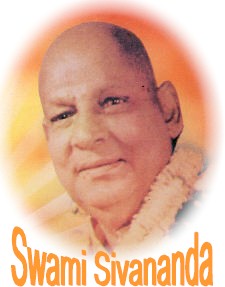
                 ---So says Sivananda.

*************************************************

MENTAL FACTORY

Mental Factory 


Now I will take you to the most wonderful mental factory. It is very close to you; it is a wonder of wonders. Even a rank materialist, if he is very sincere, will be turned into a perfect theist, instantly, if he closes his eyes for a moment and seriously reflects on the working of this marvellous factory. The Kena Upanishad opens with the following lines: "Who is the Director of this mind? Who gives Light and Power to this mind?" It goes on "Brahman is the Mind of minds, the Prana (life) of pranas, the Eye of eyes, the Ear of ears."

What a bold philosophy. At once it raises man to an unerring solution for all the different problems of life. The four mahavakyas (great utterances): "Prajnanam brahma" (consciousness is the Absolute); "aham brahma asmi" (I am the Absolute); "tat twam asi" (that thou art); "ayam atma brahma" (the Self is the Absolute), infuse power and joy into the hearts of all hearers. They produce drastic changes in your life. Then you will laugh at the vain pomp, the empty glory and the artificial and miserable life of a rich man.

The eyes and the ears are the gate keepers of this mental factory   they are the 'way in' and mouth is the 'way out'. Eyes and ears bring inside the mental factory matters for manufacture. Light and sound vibrations are brought inside through these two avenues.

First of all they are made into 'percepts' by the mind. They are then presented to the intellect. The intellect converts these 'percepts' into 'concepts' or ideas. These ideas are expressed by the outside gatekeeper, the organ of speech.

The external physical eyes and ears are mere instruments. But the real visual and auditory centres are in the brain and in the astral body   these are the real senses. Understand this point well. The intellect receives these materials from the mind and presents them to the purusha or Atman (the Self), who is behind the screen.

The mind is the head clerk of this mental factory. He has ten clerks, the five jnana indriyas (senses) to bring news from the facts outside. The facts are placed by the mind before the intellect, who places them before the purusha (inner self). A message comes back from the purusha to the buddhi (intellect). Buddhi decides and determines, and then gives the answer back to the mind, for execution. The five karma indriyas (organs of speech, hands, feet, genitals and anus) execute the order of the mind who is their master.

*************************************************

CHANGE YOUR HABITS

Change Your Habits 

Mind is a bundle of habits. Bad habits and prejudices, hidden in one's nature, will be brought to the surface of the mind when the opportunity comes. If you change the habits you can also change your character. You sow a habit and reap a character. You sow a character and reap a destiny.

Habits originate in the conscious mind but when they become established, by constant repetition, they sink into the unconscious mind and become our 'second nature'. Habit can however be changed by a new, healthy, agreeable habit, of a stronger nature. At present you are thinking, "I am the body".

Think, "I am Brahman". In the course of time you will be established in Brahmic consciousness.
Do not be a slave to one idea. Whenever you get new, healthy ideas, the old ones must be given up. In the mind there is an internal fight ever going on between 'nature' and 'will', between the old, worldly habits and the new, spiritual habits.

In the case of aspirants, the fight is between the old samskaras of the sensual world and new, spiritual samskaras. It is a fight between the good impressions of the past and bad impressions of the past. It is a fight between viveka (wisdom) and instinctive mind and indriyas (senses).

Eventually - will, which is pure, strong and irresistible, is bound to succeed. There is no doubt about this. As your reason grows and you become wiser and wiser   by study, by contact with the wise and by meditation - your mind must be well prepared to take up new, healthy, rational ideas and eschew the old, morbid ones.

Mind is your tool. When emotions arise, separate them, study them, analyse them - but do not identify yourself with them. Master your impulses, emotions and moods. Rise from the position of slave to that of a spiritual king.

- - - - -

Just as the repetition of a thought or action leads to perfection, so also does the recurrence of the same process, or the same idea, lead to the perfection of abstraction, concentration and meditation.
Give your full mind to God. Only then will you have realisation. Even if one ray of the mind runs outside, it is impossible to attain God consciousness. You cannot enjoy peace of mind, you cannot practise meditation, if there is tossing of the mind. Destroy mundane desires through dispassion and surrender to the Lord.

*********************************************

UTILISE THE SUBCONSCIOUS MIND

Utilise the Subconscious Mind 

The mental processes are not limited to the field of consciousness alone. The field of subconscious mentation is of a much greater extent than that of conscious mentation. Messages when ready, come out like a flash from the subconscious mind to the surface of the conscious mind, through the trap door in the subconscious mind. Only ten per cent of the mental activities come into the field of consciousness. At least ninety per cent of our mental life is subconscious.
We sit and try to solve a problem. We fail. We look around. We try again and again but we fail. Suddenly the idea dawns that leads to the solution of the problem. The subconscious processes were at work. The subconscious mind is your constant companion and sincere friend. Even in sleep it works without rest. It arranges, classifies, compares, sorts the facts and figures and works out a satisfactory solution.
With the help of your subconscious mind you can change your vicious nature. By cultivating healthy, virtuous qualities you can overcome the vicious nature. If you want to overcome fear, mentally deny that you have fear. Concentrate your attention on the opposite quality, the ideal of courage. When courage is developed, fear vanishes by itself. Positive overpowers negative. You can establish new habits, new ideas, new tastes and new character in the subconscious mind, just by changing the old ones.
- - - - -
All actions, enjoyments and experiences leave their impressions in the subconscious mind, in the form of subtle impressions or residual potencies. Samskaras are the root cause for life and the experience of pleasure and pain. Revival of samskaras induces memory. The yogi dives deep inside and comes in direct contact with these samskaras. 
He directly perceives them through inner yogic vision. When you desire to remember something you have to exert. You have to go down to the depths of the subconsciousness and then pick up the right thing from a curious mixture of multifarious, irrelevant matter

*****************************************************************.

HOW IMPRESSIONS ARE FORMED

How Impressions are Formed 

An experience in the sense plane sinks into the depths of the subconscious mind. There it becomes a samskara (an impression). The impression of an experience is formed in the chitta (subconscious mind), at the very moment that the mind experiences it. There is no gap between the present experience and the formation of the samskara in the subconscious mind.

One specific experience leaves one specific samskara and the memory of this specific experience springs from that particular samskara only, which was formed out of that particular experience.
When you first perceive an orange and taste it, you get knowledge of an orange. A samskara is formed in the subconscious mind at once. At any time this samskara can generate a memory of the object, the orange, and knowledge of the orange. Though the object and the act of knowing are distinguishable, yet they are inseparable.

Samskara is also known as 'residual potency'. When all vrittis or thoughts die away, the frame of the mind remains with the samskaras. This is termed the 'potential mind'. All samskaras co-exist in the mind. Vrittis slowly subside, leaving traces in the mind. These traces are samskaras. From them springs memory.

If you have yogic vision, you can vividly notice the marvels that take place in the mental factory of an individual. You can see how the vritti arises in the mind-lake. You can see how it subsides. And you can see how a samskara is formed. You will be struck with wonder. Samskaras are like forces - they either aid or inhibit one another.

- - - - -

The sum total of all samskaras is known as karmasaya (receptacle of works) and this is called sanchita karma (accumulated works). When a man leaves the physical body he carries with him his astral body of seventeen tatvas (elements) and the karmasaya, to the mental plane. Karmasaya is burnt in toto by the highest knowledge, obtained through asamprajnata samadhi (the non-dual super-conscious state).
*************************************************************

Tuesday, October 6, 2015

DEVI by SWAMI SIVANANDA

Devi
by
Swami Sivananda

 
O Devi! O Mother auspicious!
Thou art the Lord’s Maya.
Thou art His inscrutable form.
Thou art the Mother of this world.
Thou art the great primal energy.
Thou art the seed of this world.
Thou art the Light of Knowledge.
Thou art the giver of refuge.
Thou art beauty, love, and mercy.
Thou art Prakriti, Durga.
Salutations unto Thee.
DEVI or Maheswari or Parasakti is the Supreme Sakti or Power of the Supreme Being. When Vishnu and Mahadeva destroyed various Asuras, the power of Devi was behind them. Devi took Brahma, Vishnu, and Rudra and gave them necessary Sakti to proceed with the work of creation, preservation, and destruction.

Devi is the Creatrix of the universe. She is the Universal Mother. Durga, Kali, Bhagavati, Bhavani, Ambal, Ambika, Jagadamba, Kameswari, Ganga, Uma, Chandi, Chamundi, Lalita, Gauri, Kundalini, Tara, Rajeswari, Tripurasundari, etc., are all Her forms. She is worshipped, during the nine days of the Dusserah as Durga, Lakshmi, and Saraswati.

Devi is the Mother of all. The pious and the wicked, the rich and the poor, the saint and the sinner—all are Her children.

Devi or Sakti is the Mother of Nature. She is Nature Itself. The whole world is Her body. Mountains are Her bones. Rivers are Her veins. Ocean is Her bladder. Sun, moon are Her eyes. Wind is Her breath. Agni is Her mouth. She runs this world show
Manifestation of Sakti

Sakti is symbolically female; but It is, in reality, neither male nor female. It is only a Force which manifests Itself in various forms.

The five elements and their combinations are the external manifestations of the Mother. Intelligence, discrimination, psychic power, and will are Her internal manifestations. Humanity is Her visible form.

She lies dormant in the Muladhara Chakra in the form of serpentine power or coiled-up energy known as the Kundalini Sakti. She is at the centre of the life of the universe. She is the primal force of life that underlies all existence. She vitalises the body through the Sushumna Nadi and nerves. She nourishes the body with chyle and blood. She vitalises the universe through Her energy. She is the energy in the sun, the fragrance in the flowers, the beauty in the landscape, the Gayatri or the Blessed Mother in the Vedas, colour in the rainbow, intelligence in the mind, potency in the homoeopathic pills, power in Makaradhvaja and gold oxide, will and Vichara Sakti in sages, devotion in Bhaktas, Samyama and Samadhi in Yogins. Vidya, Shanti, lust, anger, greed, egoism, pride are all Her forms. Her manifestations are countless.
Siva and Sakti

The Supreme Lord is represented as Siva, and His power is represented as His wife—Sakti, Durga, or Kali. Mother Durga is the energy aspect of the Lord. Without Durga, Siva has no expression; and, without Siva, Durga has no existence. Siva is the soul of Durga. Durga is identical with Siva. Lord Siva is only the Silent Witness. He is motionless, absolutely changeless. He is not affected by the cosmic play. Durga does everything.

Siva is omnipotent, impersonal, inactive. He is pure consciousness. Sakti is dynamic. The power, or active aspect, of the immanent God is Sakti. Sakti is the embodiment of power.

Siva and Sakti are related as Prakasa and Vimarsa. Sakti or Vimarsa is the power that is latent in the pure consciousness. Vimarsa gives rise to the world of distinctions. In other words, Sakti is the very possibility of the Absolute’s appearing as many, of God’s causing this universe. God creates this world through Srishti-Sakti, preserves through Sthiti-Sakti, and destroys through Samhara-Sakti.

There is no difference between God and His Sakti, just as there is no difference between fire and its burning power. Sakti is inherent in God. Just as you cannot separate heat from fire, so also you cannot separate Sakti from God, the possessor of Sakti. Sakti is Brahman Itself. Siva and Sakti are one. Siva is always with Sakti. They are inseparable. Worship of Durga or Parvati or Kali is worship of Lord Siva.
Matter, Energy and Spirit 

Mother is the creative aspect of the Absolute. She is symbolised as Cosmic Energy. Energy is the physical ultimate of all forms of matter, and the sustaining force of the spirit. Energy and spirit are inseparable. They are essentially one.

Matter is reducible to energy. The Prasnopanishad says that Rayi and Prana—matter and energy—constitute the whole of creation. Matter is the outward index of the inward Power that its expressed by God. The Power that originates and sustains the universe is not the Jada Sakti or the electrical energy which is the ultimate reality of the scientists, but Chaitanya Sakti, the Power of the immutable Consciousness of Brahman. In fact, it is not a Power which is of Brahman, but a Power which is Brahman.
The Divine Mother
Sakti may be termed as that by which we live and have our being in this universe. In this world, all the wants of the child are provided by the mother. The child’s growth, development, and sustenance are looked after by the mother. Even so, all the necessaries of life and its activities in this world, and the energy needed for it, depend upon Sakti or the Universal Mother. The human mother is a manifestation of the Universal Mother. All women are forms of the Divine Mother.

You are more free with your mother than with anybody else. You open your heart more freely to your mother than to your father. There is no God greater than the mother. It is the mother who protects you, nourishes you, consoles you, cheers you, and nurses you. She is your first Guru. The first syllable which almost every quadruped, or human being, utters is the beloved name of the mother—Ma. She sacrifices her all for the sake of her children.

A child is more familiar with the mother than with the father, because the former is very kind, loving, tender, and affectionate, and looks after the wants of the child. Whenever the child wants anything, it runs with outstretched hands to the mother, rather than to the father. If she hears the cry of the child, she leaves her domestic work and runs immediately to attend to the child. In the spiritual field also, the aspirant or the devotee—the spiritual child—has more intimate relationship with Mother Durga than with the Father Siva. Lord Siva is quite indifferent to the external world. He is a Tyagi and a Virakta. He wears the garlands of skulls of His devotees, rubs the whole body with Vibhuti or holy ash, and remains in the crematorium in an intoxicated state. He is absorbed in contemplation of the Self. He remains in a state of Nirvikalpa Samadhi. He has handed over the power of attorney to His consort, Durga. It is Mother Durga only who looks after the affairs of the world. Lord Siva gazes at Durga, His Sakti. She engages Herself in creation, preservation, and destruction.
Durga -Lakshmi -Sarswati

Divine Mother is everywhere triple. She is endowed with the three Gunas, viz., Sattwa, Rajas, and Tamas. She manifests as Will or Ichcha Sakti, Action or Kriya Sakti, and Knowledge or Jnana Sakti. She is Brahma-Sakti (Saraswati) in conjunction with Brahma, Vishnu-Sakti (Lakshmi) in conjunction with Lord Vishnu, Siva-Sakti (Mahakali or Durga) in conjunction with Lord Siva.

Saraswati is cosmic intelligence, cosmic consciousness, cosmic knowledge. Lakshmi does not mean mere material wealth like gold, cattle, etc. All kinds of prosperity, glory, magnificence, joy, exaltation, or greatness come under Lakshmi. Appayya Dikshita calls even final Liberation as Moksha-Samrajya-Lakshmi. Mahakali is the transformative power of Divinity, the power that dissolves multiplicity in unity.

The Devi assumes many aspects according to the tasks to be performed by Her—sometimes, sweet and tender; and at others, terrible and devouring. But, She is always kind and gracious to Her devotees. Arjuna, the Pandava hero, worshipped the Goddess before starting the fight against the evil-minded Kauravas. Sri Rama worshipped Durga at the time of the fight with Ravana, to invoke Her aid in the war. He fought and won through Her grace.
The Navaratri and Its Spiritual Significance

During the Navaratri or the Nine Nights, the whole of India adores the Mother and worships Her with great devotion. Dusserah, Durga Puja, and Navaratri are one and the same. On the first three nights, Durga or the Destructive Aspect of the Mother is worshipped. On the succeeding three nights, it is the Creative Aspect or Lakshmi that is adored. And on the last three nights, the Knowledge Aspect or Saraswati is invoked. The tenth is the Vijaya Dasami Day or the Day of Victory.

There is a special significance in this arrangement. When the Devi is worshipped by a devotee in this order, as Durga, She first destroys the evil propensities that lurk in his mind. Then, as Lakshmi, She implants therein, the Daivi Sampat or the divine qualities conducive to spiritual unfoldment. Then, as Saraswati, She bestows true knowledge on him.

The tenth day commemorates the victory of knowledge over nescience, goodness over evil. It is the day on which boys are put in the school. Aspirants are initiated on this day. On this memorable Vijaya Dasami Day, the carpenter, the tailor, the mason, the artist, the songster, the typist, and all technical workers do Puja for their instruments and implements. This is Ayudha Puja. They behold and recognise the Sakti or power behind these instruments, and worship the Devi for their success, prosperity, and peace.
Worship of the Divine Mother

Worship of Devi or the Universal Mother gives not only prosperity, but liberation from all bondages. It leads to the attainment of Knowledge of the Self. The story of the Kena Upanishad, known as the Yaksha-Prasna, supports this view. Uma taught the Truth to the Devas.

Sakti is all. She can do anything. She can make or mar. She can mend or end. For the sake of the continuance of Her Divine Play here, She Herself, as Avidya-Maya, has veiled the Truth from you and bound you to this Samsara. When She is propitiated through the practice of sincere devotion and unconditional self-surrender, She, as Vidya-Maya, removes the veil and enables you to perceive the Truth.

No one can free himself from the thraldom of mind and matter without Mother’s grace. The fetters of Maya are too hard to break. If you worship Her as the great Mother, you can very easily go beyond Prakriti through Her benign grace and blessings. She will remove all obstacles in the path, and lead you safely into the illimitable domain of eternal bliss, and make you absolutely free.
May Parasakti or Devi—the Universal Mother Jagadamba—bless you all with wisdom, peace, and immortal bliss.

******************************************************
NB : Durga Puja  (Navaratri) - a festival of Devi  Worship ( October 13th - October 22nd 2015 )